Ray Garner


|
Ray Garner |
|
|
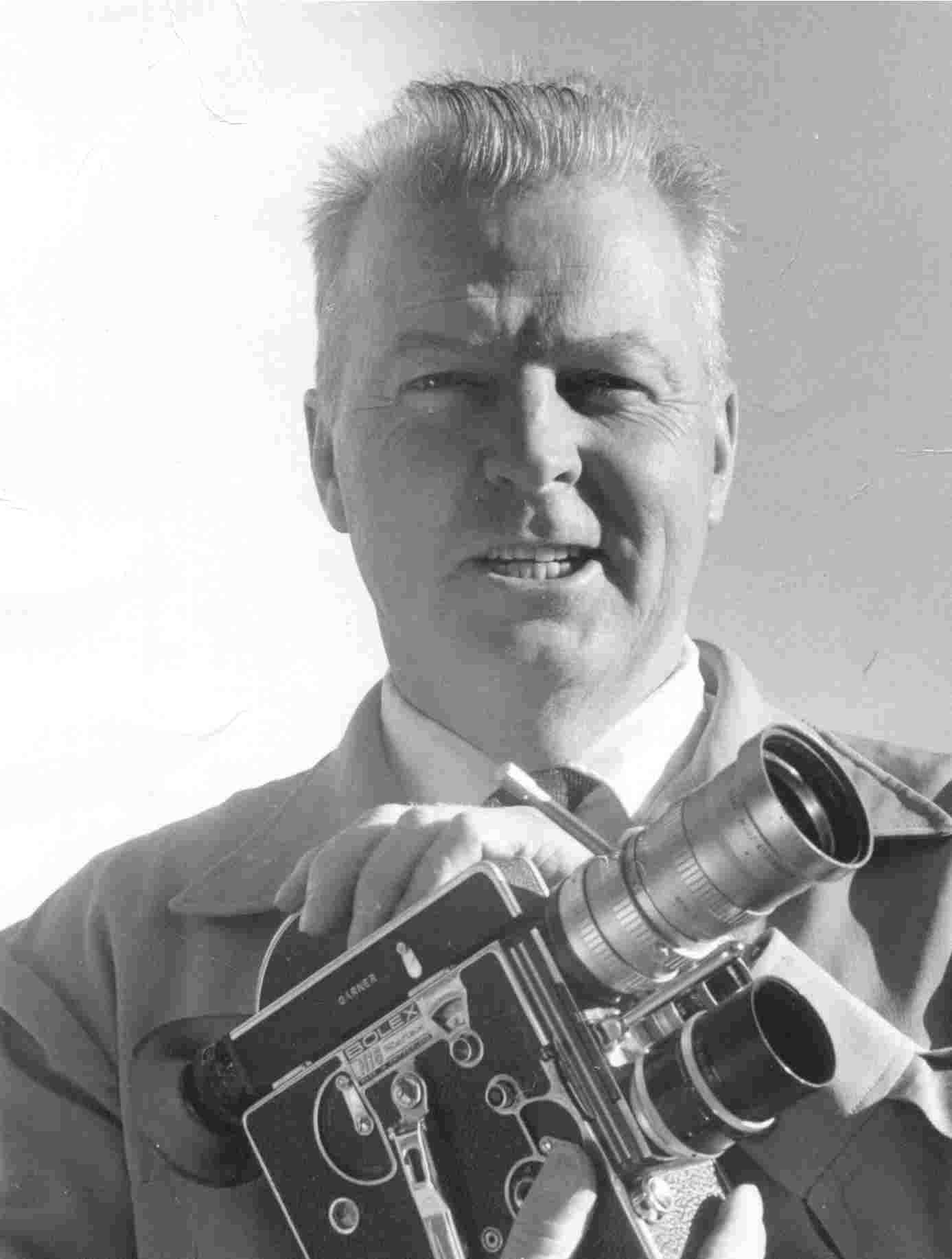
_____ . _____ Ray Garner – Producer/Director/Cinematographer/Writer View Garner's Be-ta-ta-kin (House Under the Rim) (1947), Ancient World, The: Egypt (1951) and Ancient World, The: Greece (1954), Kibbutz Daphna (1964), Land of the Book (1967) and Gay Garner in Vulture Mountains, Arizona (home movie c. 1950) Born in Brooklyn in 1913, Ray Garner began his photographic career in 1935, filming a Boy Scout climbing expedition in the Grand Tetons. This 8mm effort has been lost. In 1937, he was appointed to the position of staff photographer to the New York University Rainbow Bridge-Monument Valley expedition sponsored by the American Exploration Society. His first major film undertaking was an extended project in the Belgian Congo in 1938 where, with his wife and collaborator Virginia "Jinny" Garner, he made a series of ten African films for the Harmon Foundation, founded by real estate developer and former governor of Alaska William E. Harmon (1862-1928). Active from 1922 to 1967, the foundation was established in New York City to recognize African American achievements, in the fine arts, business, education, farming, literature, music, race relations, religious service and science. Its director was Mary Beattie Brady, who was the governess of Harmon's children, and later became well-known for her support of nurses' rights. Brady financed the African films, as well as other Garner films, through 1956. The Garners were not under formal contract, and never received a set yearly amount of financial support. Jinny Garner reminisced that "the Harmon support was wonderful, but it wasn't always there on schedule. The way it worked was we'd write a letter when we ran out of money, and sooner or later it would arrive." The Garners would occasionally have to pawn their films to bide time, waiting for the check. Holdings of the Harmon Foundation, including its films, were donated to the National Archives (NARA) in Washington DC. In the filmography below, Garner that that were confirmed to be underwritten by the Harmon Foundation are indicated by a NARA record identifier. From 1955
through 1958, Ray Garner traveled as a lecturer, illustrating his talks with his
films. He began making films for NBC
News in the early 1960s, and directed various segments in John Secondari's 'Saga
of Western Man' series for ABC News in the early 1970s, including the film '1898.' He
eventually returned to lecturing, with his silent films accompanied by a
phonograph or tape player supplying music, and lowering the volume when he
wished to make a comment. In 1966, the Garners took up residence in the southern
California mountain art community of Idyllwild. His lectures, as well as the
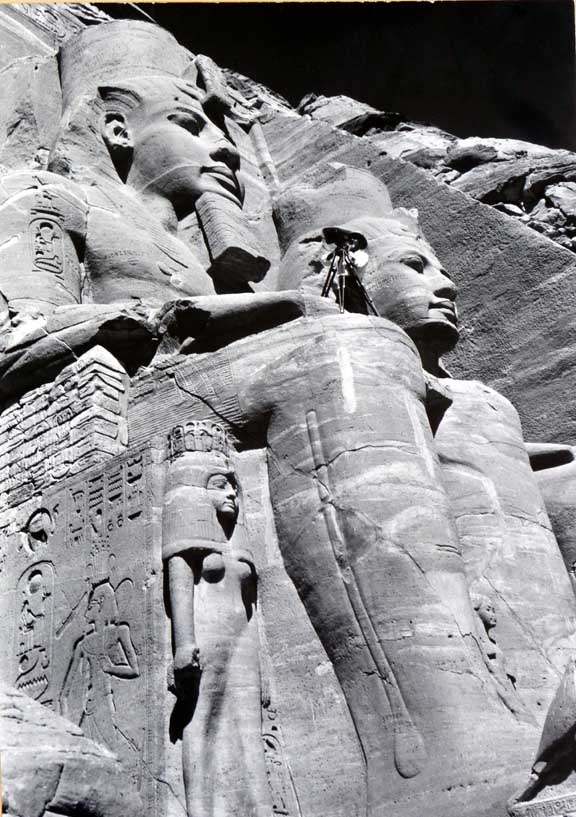
courses in mountaineering he taught, supported the family. One defining element of Garner's filmmaking technique consisted of long takes of ruins, beautiful color shots made with the film running at slow speed, allowing sunshine and shadows to pass over ruins, providing spectacular footage when run at normal speed. He shot much of his footage before Greece, Egypt, Jordan, Syria, and Israel were inundated by tourism, and no people appear in his footage of ancient architectural sites. Much of this extraordinary footage, now in the collection of the Academic Film Archive of North America, was never made into a finished film. Two that were produced and distributed, his Egyptian and Greek films, include his static shots of ruins, alternating light and dark, as clouds pass, resplendent in the Technicolor prints he insisted upon for distribution. Garner used orchestral soundtracks in nearly all his released films, and his editing to soundtrack is seen to its greatest extent in his 'Portraits in Music' films. Ray Garner passed away in
1989. He was a true auteur, whose greatest contribution to academic film
was in his breathtaking cinematography, honed to a fine point in his films on
Egypt and Greece. The AFA hosted an evening dedicated to the work of
Garner on March 27, 2003. Virginia Garner
passed away in 2007. The diaries of her experiences filming with Ray Garner in Africa
as part of the Africa Motion Picture Project have now been compiled in a book,
Images Out of Africa. Mountaineers Club Teton Expedition, The (1935, 8mm, silent) Rainbow Bridge, The: Monument Valley Expedition (1937) NYU Africa Film Project (10 films) Harmon Foundation. Titles include:
On the Farm (1940), 10m, b&w, silent. About a farm family in Michigan. Reel 1: Illustrates
pre-breakfast chores; family breakfast; father and son mow field; mother and
daughter feed chickens, and pick fruit and vegetables for family. Reel 2: Boy
drives horse-drawn hay loader while father and helper stack hay on wagon and
into hayloft. Children play in hay. Father and son plow and reap wheat; men
drive pigs into wagon; children wave as wagon leaves. Children gather eggs and
accompany father, with his produce, home at day's end. Harmon Foundation.
http://research.archives.gov/description/94937 Hampton Institute Presents Its Program Education for Life (1941), 10m,
color, silent. Filmed at Hampton Institute, premiered in the
White House by Eleanor Roosevelt; Harmon Foundation.
http://research.archives.gov/description/94892 Southern Mountains (1941?), 10m, b&w, silent. Uncredited, but thought to be produced by Garner. On life in the Southern Mountains areas of Kentucky and Tennessee. Scenic shots of mountains and homes. Townspeople pose, sew, spin wool, and make wood-carvings. Farmers with pigs and chickens. Coal mining in Harlan, Kentucky. Lumberjacks cut and process trees at mill in Crossville, Tenn. Men build house. People on porch of Community House, Wooten, Ky. (?). Woman sings and plays dulcimer. Harmon Foundation. http://research.archives.gov/description/94997 On Our Way (1942), 10m, color, silent. Uncredited, but thought to be produced by Garner. On improvement of living conditions in Pine Mountain and Harlan, Ky. R.1: Shows mountains, houses and coal mining areas; children outside billiard parlor; and several school-houses. Harmon Foundation. http://research.archives.gov/description/95007 How to Fly a Light Airplane (1942) Made at Tuskegee Institute, with Tuskegee Airmen. Thought to be a Harmon Foundation film, but unable to confirm. Let's Cooperate (1942), 10m, color, silent. On operations of cooperative food stores
run by 10th grade students at Pine Mountain Settlement School, Ky. Harmon Foundation.
http://research.archives.gov/description/94915 * Desert Shore: a Portrait in Music (1946), 20m, color, sound. Filmed in Guaymas, Sonora, Mexico.
Probably shot as a non-Harmon film during excursion that produced the Harmon
films 'Los Niños.' Canyon Depths: a Portrait in Music (1947), 10m, color, sound. A
musical short filmed in Havasu Canyon, Grand Canyon National Park. Produced by
the Arizona Motion Picture Corporation. Mesa Verde (1948) color, silent. Mountains; homes hewn in cliff-face;
flowers and trees. Archaeological finds include pottery, sculpture and
handicrafts. Paintings depict ancient Indian life in the area. Mesa Verde
National Park, Colorado, Harmon Foundation.
http://research.archives.gov/description/95065 * Rio Grande (1949?) 45m, color, silent. Snowy mountains and melting
ice feed the river. Flora of RG Valley, beautiful pans and panoramas of
desertscapes. Boating through narrow river canyons. River widens, aerial shots
of gulf. Arrowheads, baskets, pottery, stone domestic tools, pictographs, cliff
dwellings, Anasazi-era city made of bricks, adobe pueblo. San Ildefonso and
noted potter María Martinez shaping, firing, and polishing black pottery. * Pastoral (1954?) 30m, color, silent. Photographed in Peloponnesus,
Greece. A shepherd boy, portrayed by Lambi Papayanopolos, herds sheep from
winter pasture to high meadow in early Spring. Drive begins at 6th century BCE
temple of Apollo at Corinth, moves to the slope of the Acrocorinth, to the ruins
of a 17th century AD Venetian fortress, then finally finishes in the shadow of
Mt. Trikkala. Papayanopolos is shown playing flutes in the heights and ruins above
the Gulf of Corinth. Antioch Abroad (1958) Shot in Finland, Russian refugees; prod. Antioch College
Way of the Cross (1960) NBC News
Lord's Prayer, The (1963) filmed in Sequoia National Park, soliloquy by Dr.
Ralph Sockman, prod. by Presbyterian Church
Joy in the Making (1967) Idyllwild Arts Foundation. Documents the
Idyllwild School of Music and Arts (ISOMATA) summer arts programs. Feature
Meredith Willson teaching and conducting. Steere Trek (1983) Never released, this ten minute silent film shows a group of people accompanying Lora Steere, carried in her wheelchair palanquin-fashion, up to the fire watching station atop Tahquitz Peak. Steele was a famed sculptor who helped the Idyllwild mountain village become a haven for the arts. Pioneer Lora Woodhead Steere (1888-1984) visited Idyllwild as a toddler and eventually was recruited as Idyllwild School for Music and Arts' (now called Idyllwild Arts) first teacher. More on Steere at http://lorasteere.com/Lora-Steere/Home.html
Unedited Garner Footage Ray and Virginia Garner produced a rich body of work, including home movies and outtakes from films shot in the U.S Southwestern desert, Africa, Europe and the Middle East. We have uploaded the following films: Gay Garner in Vulture Mountains, Arizona Ray Garner: Bellmore Boast to Africa |
|
|